
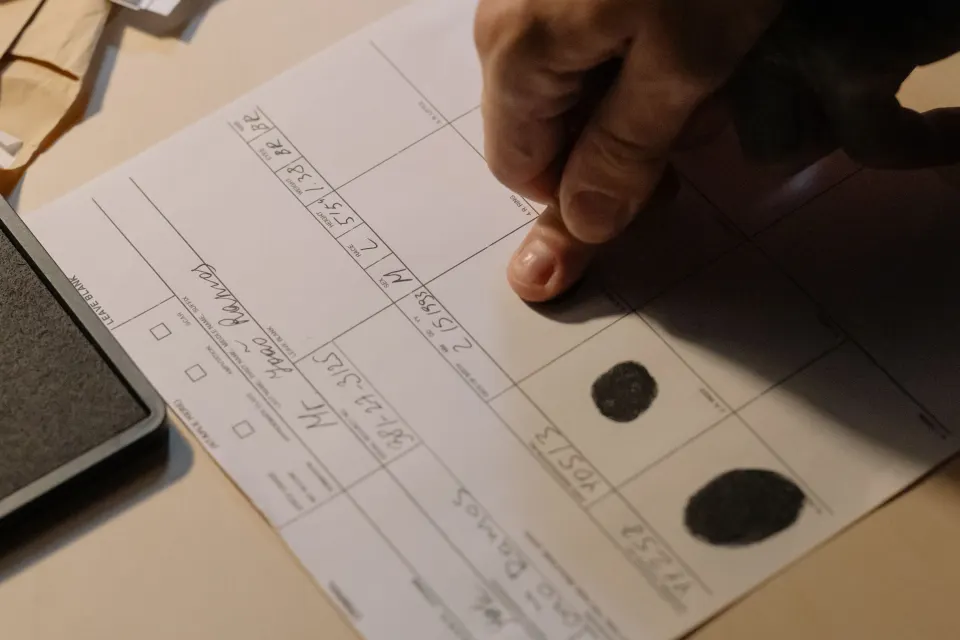

Criminal Law
Information on criminal law.

A criminal investigation may begin even before any court case exists.

A criminal investigation seeks to look into a possible criminal offense, clarify the circumstances of the act, and gather evidence on who committed it.
The police investigation (inquérito policial) is one of the procedures for this inquiry, led by the police authority. Other bodies with legal authority also conduct investigations.
The police investigation is a preliminary stage that comes before any court proceeding: it gathers information, but it is not the same as formal charges (denúncia), a prosecution, or a finding of guilt.
The need for guidance depends on the situation, the capacity in which the person was called, and the steps already taken. Some circumstances deserve special attention:
It is important to check which body issued the summons, the reason for it, and in what capacity the person will be heard: as a witness, a person under investigation, or otherwise. Rights and duties vary according to that capacity.
The analysis considers the decision that authorized the measure, the limits of its execution, and the property or documents taken. Any further steps depend on the content of the warrant and the circumstances of the search.
On learning that an investigation exists, it is necessary to understand what act is under investigation, what the procedure is, and what evidence has already been documented and can be accessed by the defense.
How the materials relate to the facts investigated, data preservation, and the possibility of return must be assessed in light of the case.
The investigative stage does not eliminate individual guarantees. Defense counsel can work to ensure that investigative steps stay within legal limits and that the rights of the person under investigation are observed.
The Attorneys' Statute (Estatuto da Advocacia) guarantees counsel the right to assist a client under investigation during the inquiry, including questioning and statements.
The defense may examine the evidence already documented that is relevant to the defense.
The person under investigation cannot be compelled to produce evidence against themselves. How this guarantee applies depends on the capacity in which the person is heard and the nature of the act.
The defense may submit arguments and questions for experts (quesitos) and request investigative steps. The competent authority will decide on the requests under the law and the circumstances of the investigation.
Please note
Access to investigative steps that are under way and not yet documented may be limited when disclosure would compromise the purpose of the investigation.
Legal work begins with understanding what is being investigated and the evidence available. Depending on the circumstances, it may involve different steps. These include:
Examining what has already been recorded, identifying the subject of the inquiry, and assessing the available evidence and the issues that need clarification.
Understanding the purpose of the act, the capacity in which the person will be heard, the applicable rights, and the regularity of the procedure.
Assessing documents, information, and investigative steps that may help clarify the facts, and submitting reasoned requests when appropriate.
Examining the lawfulness and scope of searches, seizures, and other measures, and assessing the legal steps appropriate to each situation.
In addition to following the inquiry conducted by the authorities, attorneys may carry out defensive investigation within legal limits. Provision No. 188/2018 of the Federal Council of the OAB recognizes this activity, which seeks to gather lawful evidence for the defense and may involve taking statements, researching available information, requesting expert reports and examinations, and conducting reconstructions.
Important note
These steps must respect individual rights, the privacy of the people involved, and the cases in which the law requires court authorization.
The close of an investigation does not necessarily mean there will be a criminal case. Depending on the evidence gathered and the legal circumstances, additional investigative steps may be requested.
Formal charges may also be filed when there are grounds, the case may be dismissed (arquivamento) through the legal procedure, or a non-prosecution agreement (acordo de não persecução penal) may be considered if the legal requirements are met.
Important note
Each outcome depends on an analysis of the particulars of the case and on the competent authorities.
What is being investigated, the capacity of the person heard, and the evidence already documented shape the possible steps. Understanding these circumstances is the starting point for assessing what comes next.
No. A person may be investigated without being formally named as a suspect (indiciamento). Formal naming is an act reserved to the police chief (delegado) and must rest on a technical and legal analysis of the facts, stating authorship, the material existence of the offense, and its circumstances.
It is important to check the body responsible, the date, the place, the reason for the summons, and the capacity in which the person was called. The summons should not be ignored, nor should one assume the person will necessarily be heard as a witness or as a suspect. Legal guidance can help clarify the applicable rights and duties before the act.
Confidentiality does not eliminate the defense's right to examine evidence already documented that is relevant to the defense. When the file is confidential, the attorney must present a power of attorney. Access to steps under way and not yet documented may be temporarily limited in the cases provided by law.
Yes. An investigation may be closed without formal charges being filed. Dismissal follows its own procedure, and the police authority cannot order dismissal on its own.
The length depends on the situation of the person under investigation, the nature of the offense, the applicable law, the steps required, and any extensions granted. There is no single period that applies to every investigation.
Opening an investigation does not, on its own, authorize an automatic arrest. Arrest in flagrante, temporary detention, and pretrial detention each have their own legal requirements. Temporary and pretrial detention require a court decision, subject to the conditions set by law.
In certain situations, the Public Prosecutor's Office may propose a non-prosecution agreement, provided the requirements of Article 28-A of the Code of Criminal Procedure are met. This depends on the nature of the offense and the specific circumstances and does not apply automatically to every case.
Explore topics related to criminal law. Topics without their own page appear without a link.Use the arrows to explore each topic.
Information on criminal law.

Information on arrest in flagrante.

Information on habeas corpus and requests for release.

Information on revoking pretrial detention.

Review of the lawfulness of the arrest and of the request for release.

Information on criminal cases.
Information on criminal trial hearings.

Information on appeals and criminal review.

Information on sentence enforcement.
Legal information on criminal defense, criminal case support, and other criminal law topics. This content is informational and does not replace an individual review of your case.

In 2026, Law No. 15,384/2026 was enacted, amending the Maria da Penha Law (Law 11,340/2006), the Penal Code, and the Heinous Crimes Law to address an issue that until then had no specific criminal definition in Brazilian law: vicarious violence.
Read article