Lisboa Assessoria JurídicaClient Service
+55 (47) 99769-5346
WhatsApp

Sentence enforcement: legal assistance while a sentence is served

Sentence enforcement is the stage in which penalties imposed by the criminal courts are served. Legal assistance helps check sentence calculations, assess benefits, and protect the rights of the convicted person.

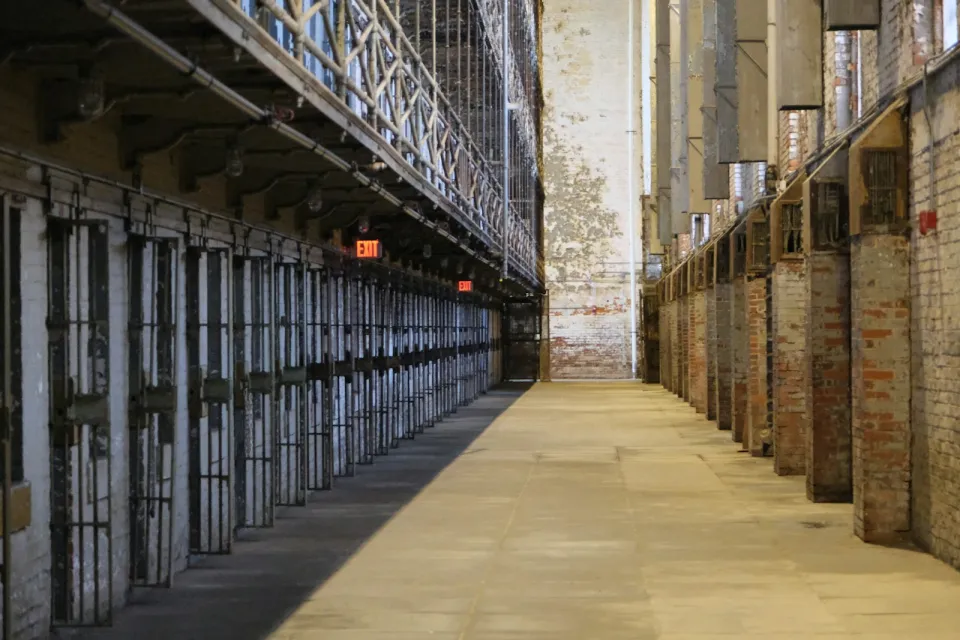
Long corridor lined with cells on one side.

What is sentence enforcement?

Sentence enforcement (execução penal) is the court proceeding that oversees how penalties and security measures (medidas de segurança) imposed in criminal decisions are served. It is governed mainly by the Criminal Execution Law (Lei de Execução Penal, Law No. 7,210/1984), which sets out the rights, duties, and conditions of this stage.

Beyond overseeing the sentence, enforcement proceedings address issues such as regime progression (progressão de regime), sentence reduction for work or study (remição), credit for time served (detração), parole (livramento condicional), and other incidents that may change how or how long the sentence is served.

What issues can be reviewed during sentence enforcement?

While the sentence is being served, various issues may be examined by the court and followed by the defense. The issues that may be reviewed include:

  • Calculating and combining sentences

    The calculation sets the time left to serve and the expected dates for reviewing benefits. When there are convictions in different cases, the sentences may need to be combined (unificação), also counting periods of provisional detention, credit for time served, and sentence reduction. Errors in these calculations can directly affect the convicted person.

  • Progression and regression of regime

    Progression allows a transfer to a less restrictive regime, provided the legal requirements are met. Regression may occur when certain situations provided by law justify a transfer to a more restrictive regime. Both depend on a court's review and on the circumstances of the enforcement.

  • Sentence reduction and time-served credit

    Sentence reduction makes it possible to shorten the time served through legally recognized activities, especially work and study. Credit for time served is the deduction of periods of provisional detention or commitment (internação) in the cases provided by law. Correctly accounting for these periods may change the calculation of the remaining sentence.

  • Disciplinary offenses and enforcement incidents

    Disciplinary incidents within the prison may have consequences for the enforcement, including for regime progression and time already credited. The inquiry must respect legal procedure and the right of defense. Decisions that go beyond the limits set by the judgment or the law may also be challenged.

When can regime progression be requested?

Regime progression allows the convicted person to move from a more restrictive regime to a less restrictive one, such as from closed to semi-open or from semi-open to open.

It depends on meeting the applicable time requirement and on an assessment of the subjective requirements set by law. The required percentages vary according to the nature of the crime, the use of violence or serious threat, repeat offending, and other circumstances provided by law.

The rules have undergone recent legislative changes, including in 2026. The analysis must therefore consider the law in force on the date of the crime and the constitutional rules on applying criminal law over time. Whether a criminological examination is required must also be assessed under the applicable law and the circumstances of the case.

Please note

Progression does not happen automatically with the mere passage of time. It requires a decision by the sentence-enforcement court after reviewing the requirements and the procedural submissions provided by law.

How do sentence reduction and time-served credit work?

Sentence reduction and credit for time served are different mechanisms that can shorten the time left to serve.

Sentence reduction for work and study

The Criminal Execution Law allows part of the sentence to be reduced through work and study, subject to legal criteria:

  • Work: one day off the sentence for every three days of work.

  • Study: one day off the sentence for every 12 hours of school attendance, spread over at least three days.

  • Completion of studies: the time credited for study is increased by one third when completion of elementary, secondary, or higher education is certified while the sentence is being served.

The law also provides for recognition of certain educational practices and reading activities, according to the applicable criteria.

Credit for time served

Credit for time served is the deduction of the period the person spent in provisional detention or commitment, in the cases provided by law. This time must be included in the sentence calculation so that periods that legally count are not lost.

What rights are preserved while serving a sentence?

A criminal conviction does not eliminate all of a person's rights. The Criminal Execution Law preserves those not affected by the judgment or by law and establishes specific guarantees for the period in which the sentence is served.

These rights include health care, legal assistance, access to education, the opportunity to work, private meetings with an attorney, and contact with family members, subject to legally permitted conditions and restrictions.

When there are violations, undue restrictions, or failures to honor the guarantees provided by law, the matter may be brought before the competent court.

What are the consequences of a serious disciplinary offense in prison?

The effects of a serious offense depend on the benefit involved and the court's decision. There are two points to consider:

The inquiry must follow the disciplinary procedure, respect the right of defense, and result in a reasoned decision. The lawfulness of the incident and of the consequences applied may be challenged when there are irregularities.

What benefits may be granted during sentence enforcement?

In addition to regime progression and sentence reduction, the law provides other mechanisms that may change the convicted person's situation. These mechanisms include:

  • Parole

    Allows the person to serve the rest of the sentence in freedom, under conditions set by the court, provided the legal requirements on time served, criminal record, and behavior, among others, are met.

  • Pardon

    An act of clemency granted by the President of the Republic by decree that may extinguish the sentence when the convicted person meets the conditions set in the decree. Each decree defines its requirements and exclusions.

  • Commutation of sentence

    A reduction of the sentence on the terms set by presidential decree. Unlike a pardon (indulto), which may extinguish the sentence, commutation changes the length or extent of the penalty still to be served.

Whether these benefits can be granted depends on an individual analysis of the conviction, the legal requirements, and the conditions set in the respective legal instruments.

How does legal assistance work in sentence enforcement?

Legal assistance begins with an analysis of the judgment, the case documents, and the record of time served. With this information, it is possible to check the calculations, identify any irregularities, and assess which legal measures may be taken.

Depending on the situation, the work may involve filing requests for regime progression, sentence reduction, credit for time served, parole, pardon, or commutation, as well as defense in disciplinary proceedings and challenges to decisions that contravene the law.

Legal assistance also makes it possible to monitor the progress of the enforcement proceedings, check compliance with court decisions, and assess whether appeals or other measures are needed.

Need legal assistance during sentence enforcement?

An analysis can show whether the sentence is being served within legal limits and whether measures are available to protect the convicted person's rights. Each situation requires individual assessment.

Chat on WhatsApp

Frequently asked questions about sentence enforcement

Does sentence enforcement begin only after the conviction becomes final?

As a rule, definitive enforcement of the sentence begins after a final, unappealable conviction, with the issuance of the commitment order (guia de recolhimento). However, the legal system recognizes specific cases of provisional enforcement. The Criminal Execution Law also contains provisions that apply, where relevant, to people in provisional detention.

Is regime progression automatic once the required time is served?

No. Meeting the time requirement does not, on its own, guarantee progression. The other legal requirements, the disciplinary record, and the circumstances of the enforcement must also be checked. Progression depends on a reasoned decision by the competent court.

How can you tell when a person will be entitled to regime progression?

The analysis covers the sentence imposed, the nature of the crime, first-time or repeat offender status, time already served in custody, recognized sentence reductions, and the applicable law. Because the percentages vary with these circumstances, no single period applies to every conviction.

Is a criminological examination required for every progression request?

Current law provides for a criminological examination for regime progression. However, its application must follow the rules on which version of the law applies over time (direito intertemporal). The Superior Court of Justice has held that the general requirement introduced by Law No. 14,843/2024 cannot apply retroactively to crimes committed before it took effect, without prejudice to a reasoned court order based on the particulars of the case. The issue is still to be settled by the Federal Supreme Court (Theme 1,408), which may change this understanding.

Can someone who works or studies in prison reduce their sentence?

Yes. Sentence reduction allows part of the time to be deducted for work and study, provided the legal criteria are met and the activities are properly documented. Recognition depends on a decision by the sentence-enforcement court.

Can a serious disciplinary offense prevent regime progression?

A serious disciplinary offense may interrupt the period for progression and reset the base date for counting, in addition to other consequences provided by law. However, the incident must be properly investigated, with the right of defense guaranteed, and its effects must be analyzed under the applicable law and case law.

Can a sentence be reduced for work or study under home confinement?

Yes. Law No. 15,402/2026 expressly established that serving a sentence under home confinement does not prevent sentence reduction. Even so, the legal requirements must be met, the activities must be documented, and judicial recognition must be obtained.

What is the difference between a pardon and commutation?

A pardon may extinguish the sentence when the requirements of a presidential decree are met. Commutation reduces the penalty on the terms set by the same type of legal instrument. They are different benefits, each with its own conditions.

Does sentence enforcement also apply to alternative sentences?

Yes. Sentence enforcement is not limited to people serving sentences in prison. It also covers the oversight and fulfillment of non-custodial sentences restricting rights (penas restritivas de direitos), fines, and security measures, under the applicable legal provisions.

BLOG

Keep exploring Criminal Law

Legal information on criminal defense, criminal case support, and other criminal law topics. This content is informational and does not replace an individual review of your case.

See all blog articles