


Criminal Law
Legal defense and support in criminal cases.

An arrest in flagrante delicto calls for immediate attention to police procedures and the detainee's rights. Legal assistance helps verify whether the arrest is lawful and assess the available measures.

An arrest in flagrante delicto (prisão em flagrante) is an arrest that may occur without a prior court warrant, that is, without an earlier order from a competent judge, in the cases expressly set out in Article 302 of the Code of Criminal Procedure (CPP).
The law considers a person caught in flagrante if they are committing a criminal offense, have just committed it, are pursued right after the act in circumstances indicating they did it, or are found shortly afterward with objects, instruments, or other items that suggest their involvement.
In continuing offenses (infrações permanentes), the flagrante situation may last for as long as the offense continues.
Please note
The lawfulness of the arrest depends on whether the actual circumstances match the situations provided by law. Mere suspicion of involvement in a crime is not enough, on its own, to justify an arrest in flagrante.
After the stop, the detained person is taken to the competent police authority, which must analyze the circumstances of the incident and the evidence presented. The procedure involves several stages:
The detained person is taken to the police station, where the police authority receives information on the incident and examines the evidence related to the arrest.
Statements are taken from the arresting party (condutor), the witnesses, and the detained person, with legal safeguards, including the right to remain silent.
With the necessary elements identified, the police authority formalizes the arrest in the arrest report (auto de prisão em flagrante, APF), which records the circumstances and the steps taken.
The arrest and where the person is held must be reported immediately to the competent judge, the Public Prosecutor's Office, and the family or a person named by the detainee.
Within 24 hours of the arrest, the report must be sent to the judge. In the same period, the detainee receives a notice of the grounds for arrest (nota de culpa), stating the reason for the arrest and the names of the arresting party and witnesses.
The detained person has constitutional rights and guarantees that must be respected during the stop, the transfer to the police station, and the other procedures related to the arrest. The main ones include:
Right to an attorney: the detained person may have legal assistance during police procedures, including questioning and statements.
Right to remain silent: no one is required to produce evidence against themselves. Exercising this right cannot be interpreted as a confession or used as grounds for a finding of guilt.
Identification of those responsible: the detained person has the right to know the identity of those responsible for their arrest and police questioning.
Notice of the arrest: the arrest and place of custody must be reported immediately to the family or a person named by the detainee and to the competent authorities.
Physical and psychological integrity: torture, violence, and inhuman or degrading treatment are prohibited.
Access for the defense: the attorney may examine evidence already documented in the investigation that is relevant to the defense, subject to legal restrictions on investigative steps still under way.
The defense's work begins with an analysis of the circumstances of the stop and of the grounds used to justify the arrest. It is not limited to being present at the police station: it involves checking the lawfulness of the procedures and taking the appropriate legal measures. The main activities include:
Analysis of the lawfulness of the arrest: review of the circumstances of the stop and whether they match the legal grounds for an arrest in flagrante.
Assistance at the police station: support during police procedures, with attention to the detainee's rights and to the proper formalization of the arrest.
Review of the arrest report: examination of the statements, documents, and evidence presented to identify inconsistencies or irregularities.
Protection of the detainee's rights: monitoring respect for the right to remain silent, to legal assistance, to notice of the arrest, and to physical and psychological integrity.
Preparation for the custody hearing (audiência de custódia): analysis of the grounds for the arrest and drafting of the appropriate legal submissions and requests.
Court measures: requests for release from unlawful arrest (relaxamento de prisão), provisional release (liberdade provisória), alternative precautionary measures, or other relief, as the case requires.
The custody hearing is the court procedure held after the arrest to review the lawfulness of the custody and assess whether continued restriction of liberty is necessary. Article 310 of the Code of Criminal Procedure provides for the hearing within 24 hours of the arrest, as a rule by videoconference, with the participation of the person in custody, their attorney or public defender, and the Public Prosecutor's Office. The law guarantees a prior, private interview with the defense.
During the hearing, the court examines the circumstances of the arrest, any irregularities, and any reports of violence or mistreatment, as well as the grounds that could justify continued custody. The defense may make submissions, challenge irregularities, report rights violations, and show that the requirements for keeping the person in pretrial detention (prisão preventiva) are absent. At the end, the judge must give reasons for the decision, which may result in:
When the arrest is found unlawful, the person is ordered released, unless there is another legal basis for keeping them in custody.
When the legal requirements are met and alternative precautionary measures are inadequate or insufficient.
When the requirements for pretrial detention are not met. It may be granted with or without bail and combined with precautionary measures, if necessary.
Please note
The custody hearing is not a ruling on the guilt of the detained person. Its purpose is to review the lawfulness and necessity of the restriction of liberty.
Yes. The judge may convert the flagrante arrest into pretrial detention when the legal requirements are met and alternative precautionary measures are inadequate or insufficient. Article 312 of the Code of Criminal Procedure requires proof that the crime occurred, sufficient indications of who committed it, and a showing of concrete danger arising from the freedom of the person under investigation or accused.
The assessment may consider elements indicating repeated commission of offenses, the use of violence or serious threat, or a risk of flight or of interference with the investigation or the gathering of evidence. These factors must be examined together with the legal requirements and the specific circumstances of the case.
Please note
The abstract seriousness of the offense, on its own, does not justify pretrial detention. The decision requires specific, individualized reasoning.
Yes. Provisional release may be granted when the requirements that justify pretrial detention are not present, subject to the applicable legal conditions. Depending on the case, release may be granted with no other obligations or combined with precautionary measures, such as:
Periodic court appearances: an obligation to appear regularly to report and account for one's activities.
Prohibition on contact: a ban on contacting certain people.
Restriction on access to places: a ban on going to specific locations.
Ban on leaving the judicial district (comarca): a travel restriction when needed for the proceedings.
Home confinement: staying at home at night and on days off, for those with a fixed residence and job.
Electronic monitoring: tracking the person's location with an electronic device.
Please note
The choice depends on how necessary and suitable the measures are to the specific circumstances. Being granted provisional release does not end the investigation or the criminal case.
Bail (fiança) is an instrument provided by law that may allow provisional release upon compliance with certain conditions.
Under Article 322 of the Code of Criminal Procedure, the police authority may grant bail when the maximum prison sentence for the offense does not exceed four years. In other situations where bail is legally permitted, it can only be granted by a judge.
The law also sets out crimes and circumstances in which bail cannot be granted, such as racism, torture, drug trafficking, terrorism, and heinous crimes (crimes hediondos).
Whether release is possible, with or without bail, depends on the legal classification of the offense, the circumstances of the arrest, and the applicable legal requirements.
The defense's work does not necessarily end with the custody hearing. What follows depends on the court's decision and the procedural situation.
When the person is granted provisional release, it may be necessary to monitor compliance with the precautionary measures imposed and the subsequent steps of the investigation or case.
When pretrial detention is ordered, the defense may analyze the grounds of the decision and assess whether to request its revocation, if there are legal reasons to challenge continued custody.
Measures may also be taken to challenge unlawful acts identified during the stop, the formalization of the arrest, or later proceedings.
Please note
Each step depends on the nature of the irregularity and the procedural stage at which it occurs.
An arrest in flagrante calls for immediate attention to police procedures and the detainee's rights. Legal assistance helps analyze whether the arrest is lawful and assess the available measures.
No. An arrest in flagrante requires the situation to fit one of the cases set out in Article 302 of the Code of Criminal Procedure. A police stop or suspicion of involvement in a criminal offense does not automatically authorize an arrest.
No. The detained person has the constitutional right to remain silent and not to produce evidence against themselves. The decision whether to make a statement should consider the circumstances of the case and the defense's advice.
The absence of an attorney does not, on its own, prevent the drawing up of the arrest report. However, the detained person has the right to legal assistance, and the attorney may attend investigative steps, provide guidance, and monitor whether legal safeguards are respected.
The custody hearing must take place within 24 hours of the arrest, under Article 310 of the Code of Criminal Procedure. The arrest report must also be sent to the judge within that period.
Missing this deadline calls for an analysis of the circumstances and the applicable legal consequences; it does not mean every situation automatically results in release.
Yes. When the arrest is unlawful, release from unlawful arrest may be requested under the guarantee in Article 5, item LXV, of the Federal Constitution. The measure seeks to end an unlawful restriction of liberty and differs from revoking pretrial detention, which concerns the loss of the grounds that justified a precautionary detention originally ordered.
Yes, in certain situations. The police authority may grant bail when the maximum penalty for the offense does not exceed four years, subject to legal restrictions. Outside these cases, provisional release and bail are decided by the courts, where legally permitted.
Paying bail does not, on its own, guarantee release in every situation. It is necessary to check whether the offense allows bail, whether the authority involved can grant it, and whether other legal grounds justify keeping the person in custody.
The person then remains in custody under a court order for pretrial detention, which has its own requirements. The defense may analyze the reasoning of the decision and, as appropriate, request its revocation or replacement with precautionary measures, or file a habeas corpus petition in the event of unlawfulness.
It is important to identify the police unit to which the person was taken, gather information about the time and place of the arrest, and seek legal assistance as soon as possible. Information about health conditions, medications, dependents, and the circumstances of the stop may also be relevant to the defense.
Explore the related topics. Select a card to read the details.Use the arrows to browse each topic.
Legal defense and support in criminal cases.

Review of the legal measures available regarding the lawfulness or necessity of detention.

Review of requests to revoke or replace pretrial detention.

Review of the lawfulness of the arrest and of the request for release.

Legal assistance during investigations and police proceedings.

Defense work throughout the different stages of criminal proceedings.
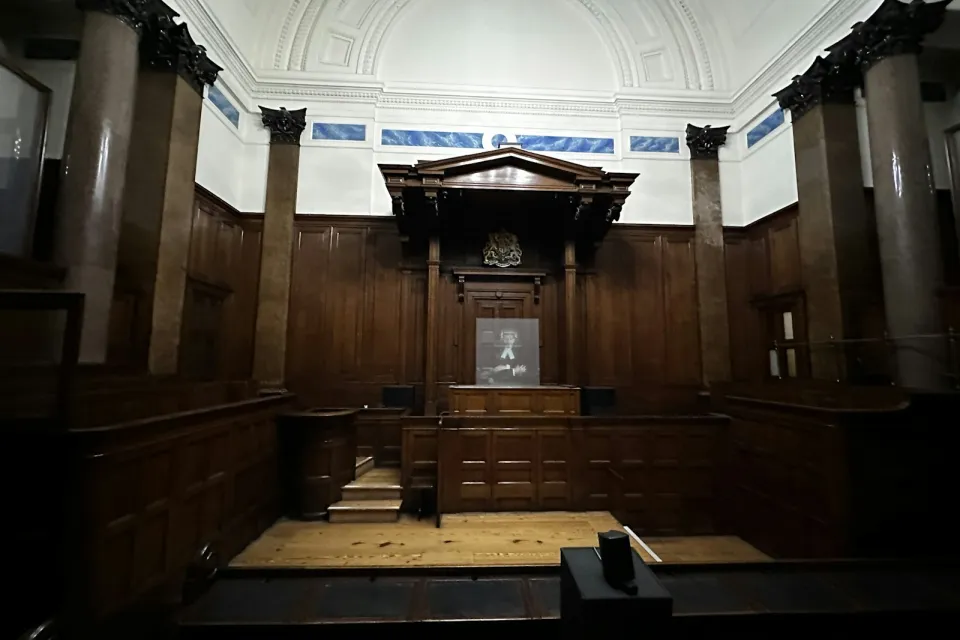
Review of the evidence and defense work during the trial hearing.

Review of the options for appeal and criminal review (revisão criminal), subject to the legal requirements.

Assistance with matters related to serving the sentence and progression to a less restrictive regime.
Legal information on criminal defense, criminal case support, and other criminal law topics. This content is informational and does not replace an individual review of your case.

In 2026, Law No. 15,384/2026 was enacted, amending the Maria da Penha Law (Law 11,340/2006), the Penal Code, and the Heinous Crimes Law to address an issue that until then had no specific criminal definition in Brazilian law: vicarious violence.
Read article